

Come home to yourself.
Everything works — the career, the life you built. And something is still missing; you've felt it for a while.
This is one-to-one coaching for exploring your mind seriously: a guide who has been there, a tested map, and a practice you can actually keep.
A free, unhurried call with one of us. No preparation, no commitment — come with questions.
If this is you
You're good at the outer game. Strategy, delivery, responsibility — you've spent years getting demonstrably good at a demanding life. And somewhere along the way you started to notice that winning it isn't the same as wanting it.
Maybe it surfaced quietly — on the ninth day of a holiday, in the flat hour after a big win, in the question you don't say out loud at work. And at some point, psychedelics moved for you from not for people like me to I want to understand this — maybe through the research, maybe through someone whose life visibly changed. You're curious, you're careful, and you don't have a map.
Here is the problem you'll meet next: almost everything on offer assumes you're either ill or already converted. There are clinics for the struggling and ceremonies for the convinced. There is almost nothing for a healthy, serious, skeptical person who wants to explore their mind wisely — with preparation, evidence, and someone sane to think with.
That is the work we do.
And if something has already opened — a ceremony, a retreat, a crisis — and you're working out what to do with it: you're in the right place too. You'll simply enter the path at a different point.
What “psychedelic” actually means
Most people think psychedelic means drugs. The word actually means mind-revealing — from the Greek psychē (mind, soul) and dēlos (revealed). A psychedelic experience is one in which something hidden in your mind becomes visible to you. Substances are one doorway to such experiences — a powerful one, and we treat it seriously. But they are the instrument, not the point. The point is your mind.
The opposite also has a name: psychecryptic — mind-concealing. The life you're tired of is full of it: the roles, the urgency, the performance of certainty, the small dishonesties a corporate life runs on. A calendar engineered so you never have an unstructured minute in which your mind might show itself to you.
Living a more conscious life means shifting the ratio: fewer structures that hide you from yourself, more that reveal you to yourself. That is the whole project — and this is coaching for it: regular one-to-one sessions with a guide, over whatever arc your situation needs. The mushrooms, if and when they're right for you, are one chapter. Often the most psychedelic experience is the one you have completely sober.
Who you'll work with
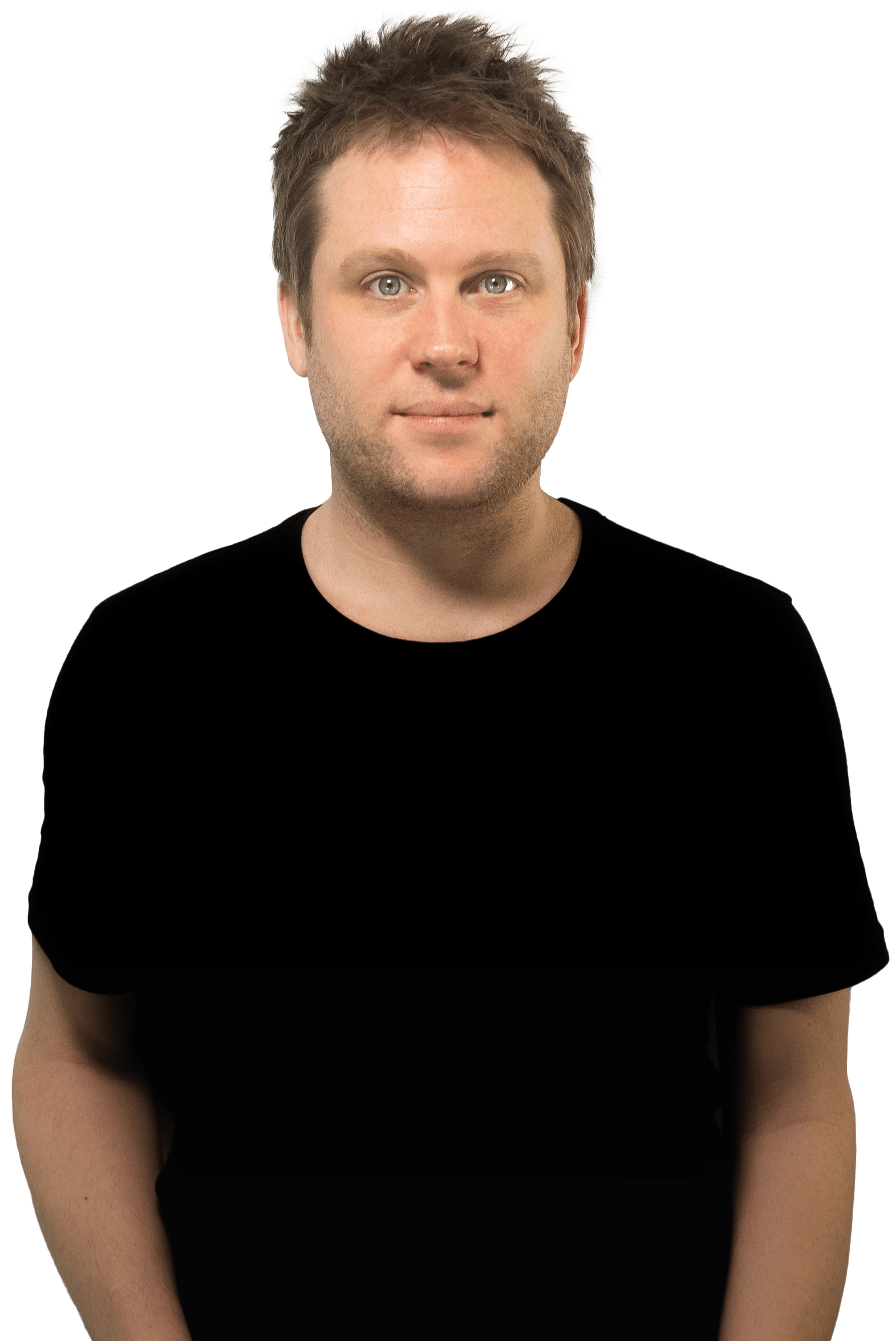
Aidan Lyon
Founder & lead coach
Founder and director of Center for Psychedelic Space, an independent research institute in Amsterdam. Philosopher, builder, and consultant; author of Psychedelic Experience: Revealing the Mind (Oxford University Press, 2023); co-developer of the PEACE methodology with the late Prof. Anand Vaidya. Sixteen years of Zen practice, with time in Japan, alongside four years of intensive daily yoga.
You can also choose to work with —
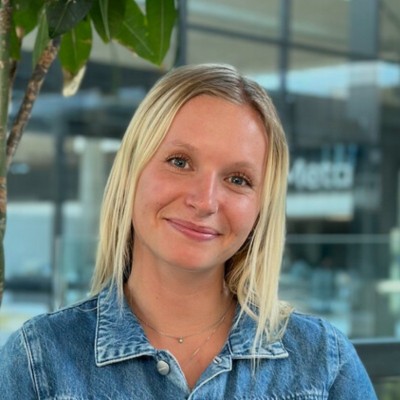
Anna Jensma
Coach
A neuroscientist (MSc, cum laude, VU Amsterdam) who trained at Imperial College London's Centre for Psychedelic Research; a 500-hour-certified yoga and meditation teacher with fourteen-plus years of practice, including nearly five months in silent retreat. She knows this territory from the lab bench and from the inside.
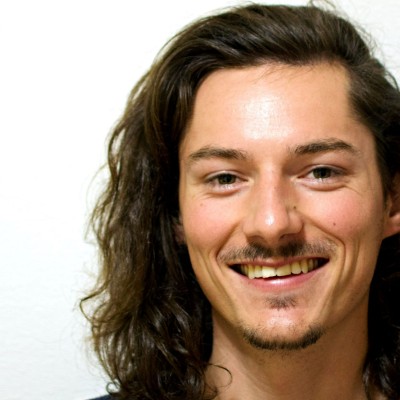
Janick Bartels
Coach
A neurocognitive psychologist whose master's thesis was an fMRI study of heart-centered meditation — he has studied, in a scanner, a state he also knows from his own practice. For three festival seasons he worked frontline psychedelic harm reduction, sitting with people through difficult states as they happened.
The three of us meet regularly to reflect on the coaching and give each other direct feedback on it. We do this because coaching quality usually depends on one person's blind spots — and we'd rather it didn't.
Nothing is wrong with you
The first thing we'll tell you is the deepest thing we know: there is nothing fundamentally wrong with you, and nothing you must do. Seeing that clearly is the whole point — and it's hard, which is why the rest of the work exists.
Three principles shape everything we do.
The gentlest thing that works. We never reach for a stronger intervention when a simpler one would do. Most of this field starts with intensity; we start with what's minimal, and escalate only when your own mind shows us why we should. Psychedelics have a place in this work — it is not the first place.
The fundamentals first. Sleep, food, movement, the conflicts you're avoiding, honesty, kindness. The things everyone believes they're already doing and nobody is. They're less glamorous than mushrooms, and harder — and they're the most powerful. Every small dishonesty is a way of hiding your mind from yourself; giving it up is mind-revealing in the most literal sense.
A map, not a religion. Behind this work is a two-and-a-half-thousand-year-old system of practice, and the modern research we've built on top of it. We hold both as maps — tested, useful, never dogma — and we'll speak whatever language fits you. Sanskrit not required.
How this translates into your particular work — which practices, in which order, at what pace — is what the first conversations are for. It's different for every mind, and finding out is most of the craft.
What a session is like
A session is sixty minutes, one-to-one, online or in Amsterdam. You bring whatever is live — an experience you're still metabolizing, a decision you can't see clearly, a practice that's gone flat. Your coach listens, asks the questions that locate you on the map, and reflects back what they actually see, including the things that are uncomfortable to say. You leave each session with a few honest lines written in your own words, and one concrete thing to practice or try before the next one.
The substances, straight
We are not trip sitters. We won't be in the room, and we don't run ceremonies. What we do is everything around the journey — and we know serious, legal, vetted people to send you to for the journey itself, here in the Netherlands, and we'll be straight with you about who is serious.
Most people prepare for a psychedelic experience for about an afternoon. It shows. With us you'd prepare for weeks: a daily practice begun, your real question clarified, the map learned — what these experiences are, what they aren't, what can go wrong and what “going wrong” even means — and honest screening, including whether this is the right tool for you at all. Sometimes it isn't, and we'll say so.
In one line: we don't sit your journey — we make sure you walk into it prepared, and don't come back from it alone.
What comes back is evidence, not instructions
Whatever a deep experience shows you will feel like the truth. Some of it is. Working out which part — what to believe, what to act on, at what pace — is a real discipline, and it's the part almost nobody offers.
So you won't resign on the Monday after. The changes that follow an opening should mature like decisions, not detonate like reactions. Six months later you may indeed have left the firm — as a choice that ripened, not a blast radius.
Why you can trust the map
The map this coaching navigates by has been in an fMRI scanner.
The frameworks this coaching runs on were not borrowed from somewhere else. PEACE, the Psychedelic-Kundalini Thesis, and the four dimensions of psychedelic space were built at Center for Psychedelic Space — published in Psychedelic Experience: Revealing the Mind (Oxford University Press, 2023) and developed through the Templeton-funded Mystical Entropy Project — by the people who coach with them.
In our 2026 fMRI study, expert practitioners entered specific chakra meditations on command, and brain activity reorganized in distinct, practice-specific ways — patterns the tradition had named in advance. This is early evidence from a small number of practitioners, and we report it that way. But as far as we know, no other coaching anywhere is upstream of its own evidence base: testing, in a scanner, the very map it coaches by.
Between sessions, clients can use Delphi, an AI companion we built for this work: it answers only from a citation-constrained corpus of contemplative and psychedelic research, and when it doesn't know, it says so rather than making something up. That is the difference between Delphi and journaling with a general chatbot — and it supports the human work; it doesn't replace it.
What you can't get elsewhere
Integration coaching is reactive — it begins after, on frameworks borrowed from other fields.
This runs on maps we built and are empirically testing ourselves, and it begins wherever you are in the arc — before, during, or long after.
Life coaching works on beliefs and behavior, and can sharpen your performance.
It has no map of transformation — and it largely ignores the body, the pre-verbal, the energetic, which is where the experiences that brought you here actually live.
Contemplative teachers carry real wisdom, but the work depends entirely on the teacher.
Here the method is structured and repeatable — PEACE and the maps — and the coaches review each other's work. You are not betting everything on one person's insight, including ours.
No other coaching does this, because no other coaching is run from inside the research institute that built and is testing its own map. Tested map, human guide, continuity — in one container.
- Sustain a practice you can actually keep — a meditation-and-integration rhythm you maintain on your own, not one that collapses when the coach is gone.
- Re-read your own map when you're lost — pick your situation back up in the four dimensions of psychedelic space, instead of waiting for someone to read it for you.
- Tell a real opening from a passing mood — distinguish a genuine shift from a fleeting state before you act on it.
- Decide under genuine uncertainty — make the next real choice deliberately, using the map, rather than reacting.
What you walk away with
Our success condition is strange for a business: that you need less. Fewer techniques, fewer ceremonies, eventually less of us — a practice you keep on your own, a map you've internalized, a Tuesday that carries some of what the peak carried.
The research points one way on this: a psychedelic gives you a large, temporary shift in consciousness. A daily practice gives you a small, permanent one — it slowly moves where you live. The substances can show you where home is. The practice is how you move there.
How it works, practically
It starts with a conversation, and continues — if we both want it to — as ongoing one-to-one sessions, at a rhythm that fits your life. No fixed program, no tiers, no minimum commitment.
Sessions are sixty minutes, one-to-one, online or in Amsterdam — €150 + VAT per session. The first conversation is free, and in it we work out together what shape the work should take: how often we meet, and for how long. Anything else you want to know about cost, we'll tell you plainly, before you commit to anything.
One boundary, stated clearly: this is coaching, not therapy. We don't work with acute crisis, and we don't give medical or dosing advice. If what you're carrying needs clinical care, we will say so honestly and help you find it — our network includes practicing psychiatrists who work in psychedelic clinical trials.
When you're ready, the first step is a conversation.
A free, unhurried call with one of us — Aidan, Anna, or Janick. Tell us where you are and what's drawing you toward this. Ask anything, including whether this is right for you — if it isn't, we'll say so and point you somewhere better.
You pick a time. We talk. Nothing is sold on the call.