Psychedelic therapy is entering clinical practice. Yet the
field can measure only about half of what happens in a
session — the rest goes unrecorded, even as the therapy
reaches the people it is meant to help.
What goes unmeasured
The field has a dominant marker for whether a psychedelic
session helps: the intensity of the mystical experience it
occasions. That marker is real, and it earned its place
— but it accounts for only about a tenth of why some
people get better and others do not. The other nine tenths
is embodied, energetic, formative, and relational, and the
field has had no map for it.
The absence is felt long before it is measured. A psychedelic
experience can be plainly significant and yet so unlike
anything ordinary that the person who has it is left without
a framework to hold it — and the clinician sitting
across from them without one either. What matters most about a
session is often the part there are no words, and no
instruments, for.
Consider what that means by comparison. In any other domain
that induces powerful transitions of mind — aviation,
surgery, deep-sea diving — basic cartography is not
optional. You do not put someone through a transformation you
cannot chart. Psychedelic therapy is the exception: it is
already in the room, and we navigate most of it blind.
That gap is not a sign the existing science went wrong. It is
a sign the map is partial — precise about the part it
covers, silent about the rest. And it does not stay still: as
the therapy reaches more people, the part of a session that
most shapes whether it heals goes on being the part no one can
yet read. Closing that gap is the work this page asks you to
consider funding.
How we are mapping it
The Center began in that gap. It exists because the map it
works on was one its founder needed and could not find —
a way to make sense of experiences that were obviously
significant and stubbornly hard to place. The work is an
attempt to build, carefully, the thing that should already have
existed.
The contemplative traditions — the yogic and tantric
ones in particular — have been describing exactly this
territory for a very long time. They name the embodied and
energetic processes the current science leaves under-charted.
Our method is to take those descriptions seriously as maps,
work out what they predict, and then test those predictions
against the brain.
Doing that without distorting either side is the hard part, and
it needs a method. Ours is called PEACE.
What makes this possible is that the Center sits at one place
where philosophy, contemplative practice, neuroscience, and AI
meet — not as a list of disciplines but as a single way
of working. Philosophy supplies the conceptual care; the
traditions supply the map; neuroscience supplies the test; and
the AI tools read first-person reports at a scale a person
could not. The synthesis is the method.
Where the work stands
A method is only worth funding if it has already produced
something. Four pieces of work mark the line so far — the
framework, the project that tested it, the map it produced, and
the calibration that names exactly the question to ask next.
ॐ
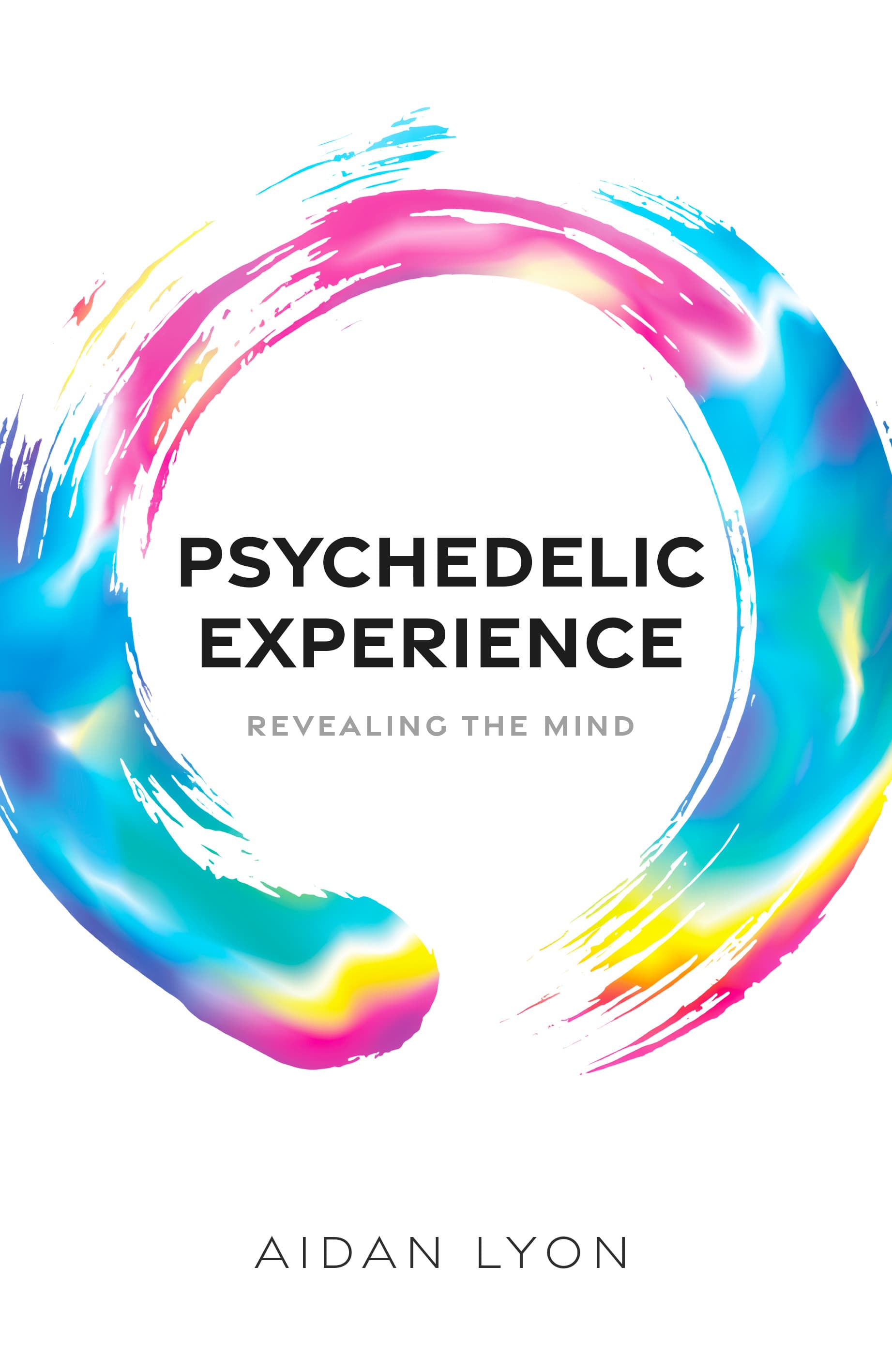
Psychedelic Experience: Revealing the Mind
Aidan Lyon
Oxford University Press, 2023
The book recovers the original sense of
psychedelic — from the Greek for
mind-revealing — and builds it into a
framework that treats psychedelic, meditative, and
spontaneous experiences as one field of study rather
than three. At its centre is the idea of
psychedelic space: a way of locating any
mind-revealing experience along a few shared dimensions,
so that states reached by very different routes can be
compared rather than just catalogued. It is where the
conceptual groundwork for everything below was laid
— a way of asking what these experiences reveal
about the mind, precise enough to be carried into a
laboratory.
ऊ
ऊ
The Mystical Entropy Project
Templeton-funded
Completed 2025
The project that turned the framework into working
instruments. It produced the PEACE method and the
Psychedelic-Kundalini Thesis, and put them to a first
test: a large-scale analysis of first-person trip
reports, read by language models, asked whether the
chakra structure would surface in accounts written by
people who had never encountered the vocabulary. It did.
That is suggestive, not conclusive — the analysis
was told what lens to look through — but it is the
signal that made the brain study worth running.
कुं
कुं
The Psychedelic-Kundalini Thesis
From Witnessing Kundalini
Lyon & Vaidya
The map the method draws. It treats the Tantric chakra
system not as metaphysics but as a description of how
attention organises itself — gathering into stable
centres, each with its own felt quality — and
proposes that psychedelics and contemplative practice
move through the same space by different doors. In the
trip-report analysis the substances sorted themselves
along the traditional ascent: opioids low and bodily,
stimulants into drive, MDMA at the heart, LSD and DMT in
the upper, visionary centres. A correspondence in how
experience is shaped — not a claim that a drug is a
practice, or that chakras are organs.
दृ
दृ
Yogic Neurophenomenology
fMRI calibration
Working paper, 2026
The first test against the brain. The tradition
describes inner experience as flowing through three
channels — two that differentiate, one that
integrates — so the thesis predicts the brain
should organise the same way. Two expert practitioners
entered four meditative states in the scanner. The
integrating channel was the same brain-wide pattern
across both of them, very nearly so; and each meditation
reshaped the three channels in the order the tradition
names — a pattern that does not appear by chance,
and does not match breath, movement, or arousal.
Two practitioners is a calibration, not a
result. It does not confirm the map; it shows
the method works, and names exactly the question to ask
at scale.
The next step, and what support funds
The step that turns a signal into a map is a full,
pre-registered study: twenty to thirty experienced
practitioners, more comprehensive neuroimaging, and cognitive
and behavioural tasks alongside the scans. Done at that scale,
the correspondence is either confirmed or it fails honestly
— and either way it is tied to how people actually think,
feel, and change. That is the work that gives clinicians
something to read a session by, while the therapy is already
in the room.
The Center is an independent research institute — no
university department behind it, no venture capital. That is a
deliberate choice, and it has a cost: the questions are not set
by a funder's priorities or a department's incentives, and the
work runs on the people who think it matters. Support —
of any kind — goes to a few concrete things, roughly in
this order.
The full fMRI study. Scanner hours,
practitioner recruitment, and the cognitive and
behavioural testing that goes alongside the scans. A single
session is expensive, and the sample has to be large enough
— twenty to thirty practitioners — for the
calibration finding to hold or fail honestly. This is the
step that moves the work toward the clinic.
Researcher time. The unglamorous majority
of the cost: the months of reading, analysis, and writing
between a question and a published paper. Independent of an
institution, this time is not salaried by anyone else.
Academic publishing. Open-access fees,
which keep a paper readable by anyone rather than locked
behind a journal paywall — a real, recurring cost
of doing research in the open.
The AI tools. The compute and
development behind Delphi and Sarasvatī, the
citation-constrained companions built for this work, and
the analysis pipelines that read first-person reports at a
scale a person could not.
Get in Touch
Whether you’re a researcher, practitioner, organisation, or simply
curious — we’d love to hear from you. Drop us a line and
we’ll get back to you personally.
Your message is on its way
We’ve received it. In a moment you’ll get an automatic reply
from Delphi — then one of our humans will follow
up with you shortly.